
From Dry Slopes to Disaster Zones: Why Landslide Modeling Needs a Rain Check

When do landslides actually happen? Not when the slope is steep—but when it’s steep, saturated, and pushed past its tipping point. And yet: most landslide models in use today ignore that final push. They tell us where landslides might occur based on slope and soil—but not when. And that omission is what leaves so many […]
What Makes a Good Hazard Model for Critical Infrastructure Operations? 6 Questions to Ask

Hazard models are everywhere, from FEMA flood maps to state landslide inventories to national wildfire indices. But not all models are created equal. For infrastructure operators (be it pipelines, utilities, transportation, renewables and beyond), integrity engineers, and damage prevention teams, these models directly influence decisions on where to deploy crews, how to prioritize integrity management […]
No More Data for Data’s Sake: Cutting Through Pipeline Data Clutter

Pipeline operations and integrity teams are inundated with data. From LiDAR scans and IMU readings to photogrammetry, satellite imagery, and weather feeds, the volume of incoming information can feel paralyzing. As one panelist at Teren’s recent Operator discussion on weather and external force threats put it, the real challenge isn’t always a lack of data—it’s […]
Wildfire Ready: How the USDA-NRCS Is Using Environmental Intelligence to Prioritize Forest and Rangeland Resilience

Introduction With over 500 million acres of U.S. grazing lands under growing wildfire pressure, the USDA Natural Resources Conservation Service (NRCS) is advancing innovative strategies to address these challenges. Through the Rangeland and Forestland Fuel Management Hazard Zone Prioritization for Conservation Treatments project, commonly known as “NRCS Wildfire Ready,” the agency is piloting a scalable […]
Introducing Terevue Geotech Module: Predictive Insight for Landslide Risk

Pipeline operators, asset managers, and environmental engineers are under growing pressure to monitor and manage geotechnical hazards like landslides. Dormant threats can awaken with a single downpour, and policies such as PHMSA CFR 192.613 and ADB-2022-01 are now clear: pipeline operators must move beyond reactive responses and demonstrate proactive, risk-based management before severe weather turns […]
Introducing Terevue Hydrotech: Real-time Flood and Scour Risk Intelligence for Pipeline Operators

Flooding doesn’t wait for maps to be updated. Yet too many asset managers and operators are still relying on legacy flood tools that were never built for today’s extreme weather—or the critical infrastructure they threaten. That’s why Teren is proud to introduce the Hydrotech Module—the latest addition to the Terevue Platform, purpose-built to help pipeline […]
Harnessing Geospatial Data and Machine Learning to Protect Your Pipeline

Pipelines face constant challenges from external, natural forces that can compromise safety and operational integrity. Geospatial data science has emerged as an innovative approach to better understanding, predicting, and mitigating these complex environmental risks. By leveraging advanced mapping technologies and sophisticated risk assessment tools, pipeline integrity engineers and operations managers can now anticipate potential threats […]
Teren Joins the Colorado-Wyoming Climate Resilience Engine Digital Twin Accelerator

Teren has been selected to participate in the inaugural Colorado-Wyoming Climate Resilience Engine Digital Twin Accelerator, a pioneering program designed to accelerate startups utilizing digital twin technology for climate resilience. This program, backed by a coalition of corporate, governmental, and research partners, offers unparalleled access to resources that will enhance Teren’s ability to drive innovation […]
The Evolution and Applications of Environmental Twin Technology: Webinar Insights

This article follows up on insights shared during the Pennsylvania Geospatial Coordinating Board’s recent webinar on AI-powered digital twins and quality of life innovations, featuring Kat Kraft, VP of Market Development at Teren. The environmental technology landscape is undergoing a remarkable transformation, with digital twins emerging as a powerful tool for understanding and managing our […]
Building Transportation Resilience: 5 Key Analytics to Manage Increasing Environmental Threats
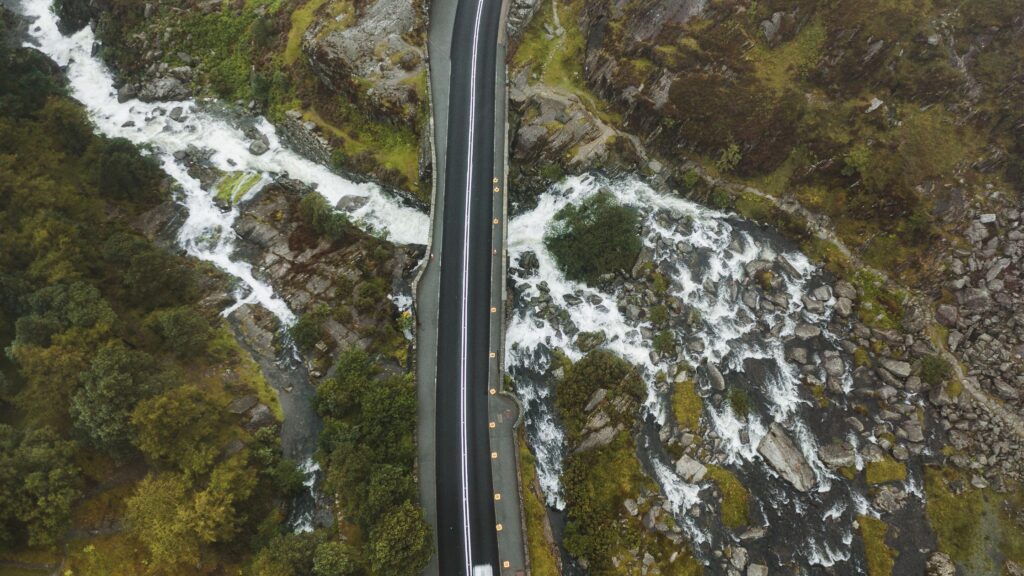
In today’s rapidly changing climate, transportation infrastructure faces growing challenges from environmental and climate-related hazards. Roads, highways, railways, and critical transit corridors are increasingly vulnerable to extreme weather events, shifting climate patterns, and other environmental risks. Addressing these risks requires a robust suite of advanced analytics to inform proactive planning, prioritize investments, and support resilient […]